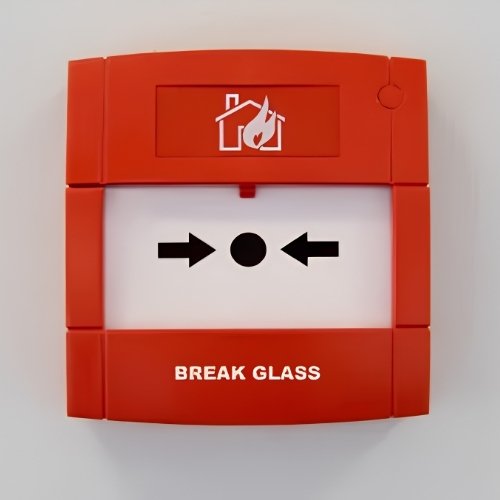
Conventional Manual Call Point
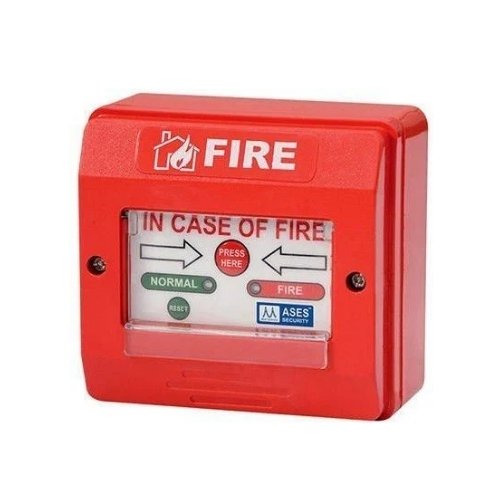
A Conventional Manual Call Point (MCP) is a manually operated fire alarm initiating device used to allow people to raise a fire alarm when they see smoke, fire, or another emergency condition. It is connected to a conventional fire alarm control panel, where activation of the call point changes the electrical condition of the fire alarm zone and initiates the configured alarm response.
Conventional manual call points are commonly installed near fire exits, escape routes, staircases, corridors and other accessible locations so that occupants can quickly activate the fire alarm system during an emergency.
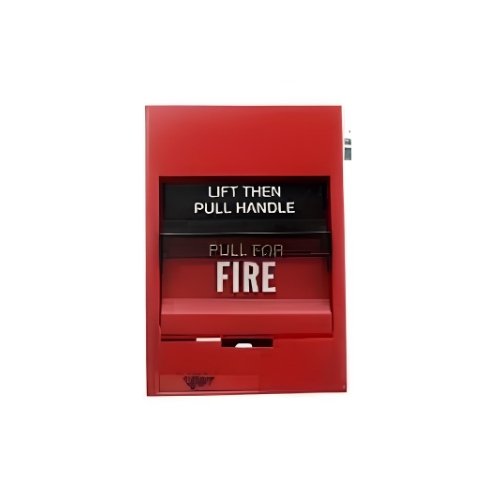
Depending on the selected model, a conventional manual call point may use a break-glass element or resettable operating element, and may be available for surface or semi-flush mounting.
Key Features
- Manual fire alarm initiation
- Designed for conventional fire alarm systems
- Red, highly visible housing on commonly used models
- Break-glass or resettable operating options, depending on model
- Surface or semi-flush mounting options
- Simple connection to conventional fire alarm zones
- Front or key-based testing/reset on applicable models
- LED alarm indication available on selected versions
- Suitable for commercial, industrial and institutional applications
- EN 54-11 compliance available on applicable certified models
What Is a Conventional Manual Call Point?
A conventional manual call point is a manual initiating device that allows a person to activate a fire alarm without waiting for an automatic detector to sense the fire.
When the operating element is activated, the MCP changes its electrical state. The connected conventional fire alarm control panel detects this change and identifies the relevant fire alarm zone.
Unlike an addressable manual call point, a conventional MCP normally does not provide an individual device address to the panel. Instead, it operates as part of a conventional detection zone.
How Does a Conventional Manual Call Point Work?
The basic operating sequence is:
Person detects fire → MCP is activated → Electrical condition changes → Conventional fire alarm panel detects the zone → Alarm sequence starts → Audible/visual notification devices operate
Many conventional MCP designs use a resistor and normally open contact arrangement, although the exact electrical configuration depends on the manufacturer and model. For example, Honeywell/Gent conventional MCP documentation specifies a 470 Ω resistor and normally open contact on its applicable range.
Conventional Manual Call Point vs Addressable Manual Call Point
|
Feature
|
Conventional Manual Call Point
|
Addressable Manual Call Point
|
|
System type
|
Conventional
|
Addressable
|
|
Device addressing
|
Normally zone-based
|
Individual device address
|
|
Connection
|
Conventional detection zone
|
Addressable loop/SLC
|
|
Alarm identification
|
Zone level
|
Individual device level
|
|
Panel requirement
|
Compatible conventional FACP
|
Compatible addressable FACP
|
|
Typical installation
|
Conventional fire alarm systems
|
Intelligent/addressable fire alarm systems
|
|
Wiring
|
Depends on panel/system design
|
Depends on addressable protocol
|
|
Selection
|
Must match conventional panel
|
Must match panel protocol
|
Important: A conventional MCP should not be assumed to work with an addressable fire alarm panel simply because both devices are called “manual call points.” Compatibility depends on the system architecture and manufacturer.
Technical Specifications
Because Conventional Manual Call Point is a product category rather than one specific model, the exact electrical and mechanical specifications vary by manufacturer.
|
Specification
|
Typical / Model-Dependent Information
|
|
Product Type
|
Conventional Manual Call Point
|
|
Function
|
Manual fire alarm initiation
|
|
System
|
Conventional fire alarm system
|
|
Operating Element
|
Break glass or resettable, depending on model
|
|
Housing Colour
|
Commonly red
|
|
Mounting
|
Surface or semi-flush, depending on model
|
|
Alarm Indication
|
LED on selected models
|
|
Electrical Configuration
|
Model-dependent
|
|
Resistor
|
Model-dependent
|
|
Contact Type
|
Model-dependent
|
|
Certification
|
EN 54-11 on applicable certified models
|
|
IP Rating
|
Model-dependent
|
|
Operating Temperature
|
Model-dependent
|
|
Dimensions
|
Model-dependent
|
|
Weight
|
Model-dependent
|
For example, an Apollo conventional MCP model is specified for 18–30 VDC, uses a dry contact, supports surface/semi-flush mounting and is EN 54-11 certified. These specifications should not be treated as universal specifications for every conventional MCP.
Break Glass vs Resettable Manual Call Point
Break Glass Manual Call Point
A traditional break-glass MCP uses a frangible glass element that is broken or displaced to operate the alarm mechanism.
It provides a familiar manual alarm interface and is available in many conventional fire alarm systems.
Resettable Manual Call Point
A resettable MCP uses a resettable operating element rather than requiring replacement of glass after every activation.
This can simplify testing and restoration of the device. Some manufacturers provide a dedicated test/reset key for this purpose.
Which one should you choose?
The appropriate operating mechanism should be selected according to the fire alarm system design, applicable standards, maintenance requirements and project specification.
Where Should a Conventional Manual Call Point Be Installed?
Manual call points are generally positioned where occupants can readily access them during an emergency, particularly around fire exits and escape routes.
The exact spacing and positioning requirements should be determined according to the applicable local fire code, building regulations and project design. For example, Honeywell's fire-system design guidance references BS 5839-1 for MCP siting and specifies locations such as storey exits and exits to open air.
Typical locations include:
- Building exits
- Fire escape routes
- Staircases
- Corridors
- Entrance/exit areas
- Commercial buildings
- Industrial facilities
- Warehouses
- Hospitals
- Schools and institutions
- Hotels
- Offices
- Shopping centres
Conventional Manual Call Point Installation
Before installation, confirm that the MCP is compatible with the selected conventional fire alarm control panel and that its electrical configuration matches the fire alarm zone.
General installation considerations include:
- Select an accessible location according to the approved fire alarm design.
- Confirm the required mounting arrangement.
- Install the appropriate back box or mounting arrangement.
- Terminate the fire alarm zone wiring according to the manufacturer's instructions.
- Install the specified resistor/end-of-line arrangement where required by the panel.
- Secure the MCP and operating element.
- Test activation from the MCP.
- Confirm correct alarm indication at the fire alarm control panel.
- Reset the device according to the manufacturer's procedure.
- Record the test and restore the system to normal operation.
Do not use a generic wiring diagram for every MCP. Terminal arrangement, resistor value, contact configuration and testing method can vary between products.
Applications
A Conventional Manual Call Point can be used in a wide range of conventional fire detection installations, including:
- Commercial buildings
- Offices
- Schools and colleges
- Hospitals and healthcare facilities
- Hotels
- Retail stores
- Warehouses
- Manufacturing facilities
- Industrial buildings
- Residential/commercial complexes
- Utility buildings
- Institutional facilities
For outdoor, weatherproof or hazardous-area applications, select a purpose-designed MCP rather than assuming a standard indoor MCP is suitable. Manufacturers offer dedicated weatherproof and intrinsically safe variants for specific environments.
Conventional Manual Call Point Maintenance
Regular inspection and testing are important because the MCP is a life-safety initiating device.
Maintenance should include:
- Visual inspection for physical damage
- Checking accessibility and visibility
- Checking operating element condition
- Testing alarm activation
- Confirming correct panel indication
- Checking LED indication where provided
- Inspecting wiring and terminals
- Checking labels/signage
- Resetting the MCP after testing
- Recording maintenance activity
Testing should always follow the manufacturer's instructions and the applicable fire alarm maintenance standard.
How to Select the Right Conventional Manual Call Point
Before purchasing, confirm:
1. Fire Alarm Panel Compatibility
The MCP must be suitable for the conventional fire alarm control panel and its zone circuit.
2. Operating Mechanism
Choose break-glass or resettable operation according to the project requirement.
3. Mounting Type
Check whether surface or semi-flush mounting is required.
4. Indoor or Outdoor Installation
For exposed locations, verify the required environmental/IP protection.
5. Certification
Where required, select a model with the applicable third-party certification, such as EN 54-11.
6. Electrical Configuration
Verify voltage, resistor/EOL arrangement, contact type and current/contact ratings from the exact manufacturer's datasheet.
Why Buy Conventional Manual Call Point from DNG Fire Engineering?
DNG Fire Engineering supplies fire alarm and fire safety products for commercial, industrial and building protection applications.
For a conventional manual call point, we can help you select the appropriate product based on:
- Existing fire alarm panel
- Conventional zone configuration
- Indoor/outdoor application
- Mounting requirement
- Break-glass or resettable operation
- Certification requirement
- Project quantity
- Installation requirements
For an exact quotation, share the required quantity and existing fire alarm panel make/model with our team.
Frequently Asked Questions
What is a conventional manual call point?
A conventional manual call point is a manually operated fire alarm initiating device connected to a conventional fire alarm control panel. It allows a person to manually raise an alarm when a fire or emergency is observed.
Is a conventional MCP addressable?
No. A conventional MCP normally works as part of a conventional detection zone rather than having an individual digital address like an addressable MCP.
Can a conventional manual call point be connected to an addressable panel?
Not directly in the same way as an addressable MCP. Compatibility depends on the panel architecture and approved interface arrangement. Always check the panel manufacturer's compatibility documentation.
Is a conventional manual call point the same as a break-glass unit?
Not necessarily. Break-glass is one operating method. Many conventional MCPs are also available with resettable operating elements.
Are conventional manual call points available with LED indication?
Yes. Some models include an LED that provides visual indication after activation. The availability and electrical characteristics are model-specific.
Are conventional manual call points EN 54-11 certified?
Many certified models are designed and approved to EN 54-11, but certification must be verified for the exact manufacturer and model being supplied.
Can a standard indoor MCP be used outdoors?
Not automatically. Outdoor applications require an MCP specifically designed and approved for the environmental conditions. Weatherproof MCP versions are available for suitable applications.